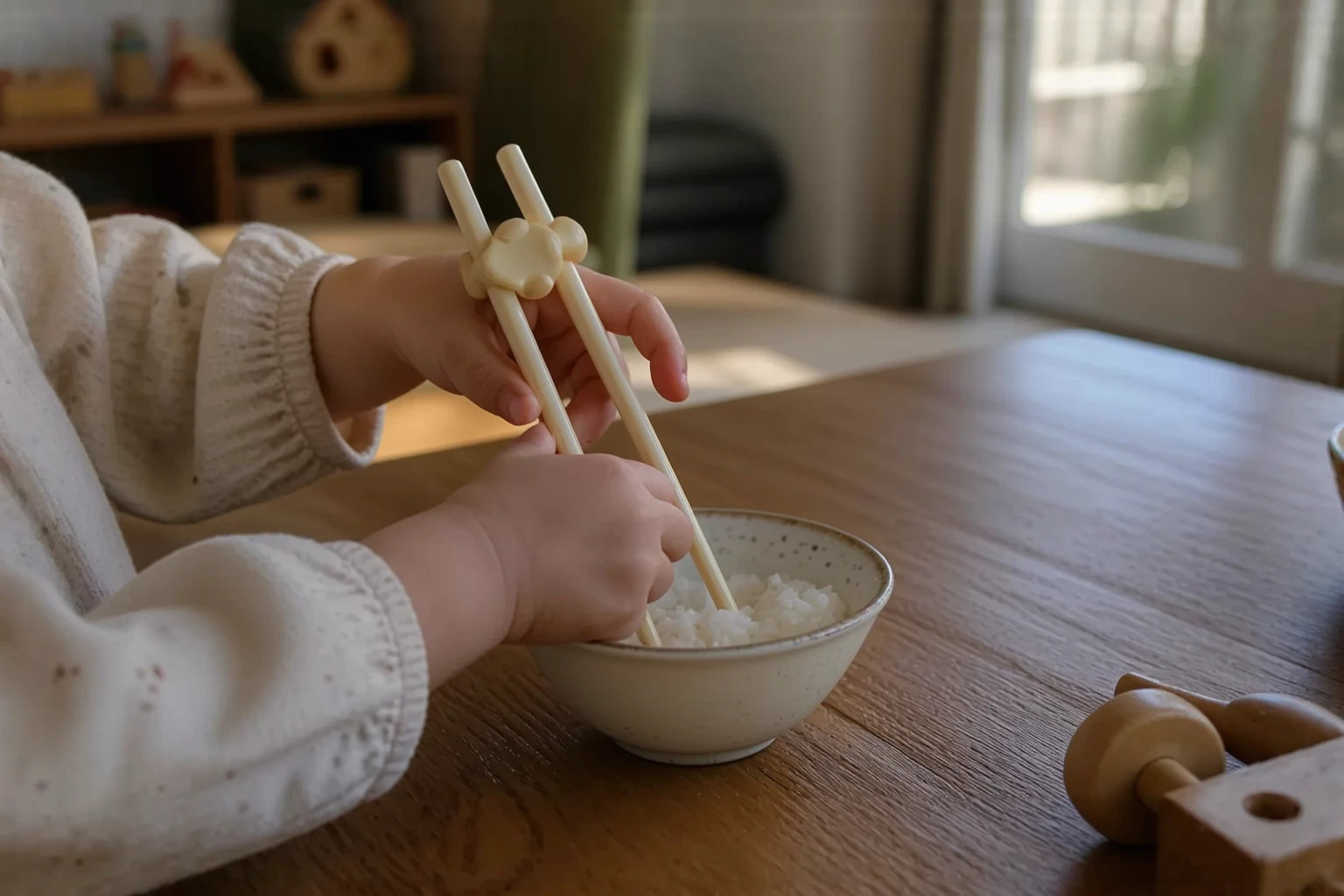

Training chopsticks are two sticks connected at the top by a guide ring that holds them parallel, so your toddler can focus on the actual motor skill: the pinch-and-pivot motion. A few things worth checking before you buy: connector firmness (too loose and they’re fighting the tool), length (most toddler sets run 6–7 inches, good for ages 2–4), and buy at least two pairs because one will disappear immediately.
Below are the four sets we tried with a two-year-old. The connector might feel stiff at first, and you could mistake that firmness for a design flaw—but that’s actually what prevents the sticks from separating when your toddler is learning the grip.

The Set That Finally Stayed in the Connector Without Slipping
Most training chopstick connectors are either too loose (your toddler fights the tool) or too stiff (you end up helping more than they learn). This set hits that middle ground where the guide ring actually holds the sticks steady without requiring constant parental adjustment.
What works
- The connector firmness lets your toddler feel the pinch-and-pivot motion without the sticks sliding apart mid-bite
- Six inches is the sweet spot for two-year-olds—long enough to grip comfortably, short enough to not feel unwieldy
- The four-pair pack means you actually have backups when one pair vanishes into the couch cushions
What doesn’t
- The connector can feel stiff for the first few uses—you’ll want to gently work it open and closed before handing them to your child
- The animal designs fade after dishwasher cycles, so these won’t look pristine after a season of real use
I almost returned this set after the first awkward attempts, convinced the connector was too tight—but after a week of daily use, it loosened just enough to feel natural. Check the current price on Amazon
This post contains affiliate links. As an Amazon Associate, I earn from qualifying purchases at no extra cost to you.